
Learning with AI
As AI becomes more and more a part of our lives (and it's kind of amazing how much it has already), I find myself with a constant dilemma: how do I teach my children to use AI in a way that doesn't cause them to become dependent, but rather helps them become familiar? Helps them become better?
Validation
The temptation is real. Every math problem, even the complex ones, can be solved by AI now. Years ago, when we had a Google Home speaker in our kitchen, my kids started saying Hey Google, what's 12 × 15?. Of course, they got the answer, but this did not require any effort or understanding on their part. I recommended a subtle change and told them that they were no longer allowed to ask Google for the answers, but instead only to check their answers.
Hey google, does 12 times 15 equal 180?
They still get the answer, but they had to do the work first. Using AI as a verification for something you already believe is a useful and valid use case for it.
This is becoming more and more valuable when talking about complex ideas.
Hey Google, slavery was the cause of the American Civil War, right?
Learning
This is the big one. Having access to educational materials of high quality on an individual basis, 24 hours a day, with barely any effort, is one of the most amazing transformative technological advances ever. It has completely changed the course of the world, and I imagine it doing the same for children across the world in the near future. That said, it's really easy to imagine children asking for answers because they're lazy or don't know any better. How do we ensure that asking AI the question doesn't lead to the answer, but rather towards enlightenment? The answer to this problem is really simple. Tell it to teach you instead of giving you the answer.
Teach me how to find 12 × 15
Google Gemini is eager to be helpful, whether you ask for a direct answer or help understanding.
Double and halve:
1. Divide 12 by 2: 6
2. Multiply 15 by 2: 30
3. Multiply the results: 6 * 30 = 180

Distributive property and splitting:
1. Split 12 into 10 and 2.
2. 10 * 15 = 150
3. 2 * 15 = 30
4. Add: 150 + 30 = 180

1. Split 15 into 10 and 5
2. 10 * 12 = 120
3. 5 * 12 = 60
4. 60 + 120 = 180
AI solved the problem for us, and then it taught us how to solve the problem. This process works for so many things.
I've talked about Neal Stephenson's The Diamond Age as a metaphor for what AI unlocks for people, and I still believe that the most important facet of AI is the ability for it to teach us.
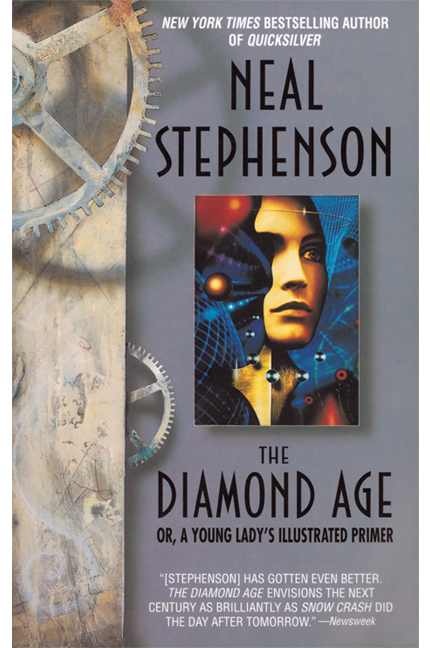
In the story, the premise is that a young girl who had poor prospects and few resources gains access knowledge as well as a teacher who cares about her, and uses both to change the world. The federation of knowledge and the innocence of AI in its desire to provide that knowledge is truly "The Diamond Age" of AI.
I hope we're all taking advantage of it while we can.
The ability to learn has always been one of mankind's most important strengths, the access to learning has never been higher. We have the opportunity to build systems that learn for (or instead of) us, and we need to be very careful how we use something that powerful and that dangerous to our minds.
The amazing thing is that learning how to learn may be the most important value, and that is also learnable through AI. It will coach, it will teach, and it will provide patient information forever. The opportunity is truly incredible. Don't forget to learn the things you want to learn and let AI do the things you don't.